Skip to content

Alternatives to the War on Drugs (2002)

Thirty years ago as a young student minister in Michigan I preached against our government’s persecution and prohibition of drugs. In the back of the room the local police and prosecutors sat, glowering. In the front, in the pulpit, I rolled what appeared to be a joint. However, because marijuana was illegal, I had to use imaginary marijuana, relying only on the placebo effect for our shared spiritual experience. I toked it up, held my breath, and passed it around as a communion. Most people…

Read more

Perihelion Promise

Let Perihelion Day serve as a metaphor for this sermon celebrating our place and time in the cosmos, especially as we approach the inauguration of our next U.S. president, Barak Obama.

It seems paradoxical that here on Perihelion Day, when we’re the closest to the sun, we’re so cold.  If we’re three million miles closer now than we are on July 4th, Aphelion Day, why aren’t we hotter now and colder then?  It depends more on the angle of the relationship than the distance.  Our northern hemisphere gets a glancing-off short day of sunlight that also has to penetrate more atmosphere at that shallow angle.  So, while we’re closer than ever, we’re coldest because of our angel of relationship with our sun, the source of all life and energy.  


Most religions are interested in supernatural realities; I’m more interested in super natural realities.  Most sermons elaborate on scriptural passages; I build on scientific and Deistic principles.  Most preachers these days are more likely to talk about angels than angles.  Let our angles evoke our angels.  Let us make the perihelion paradox into the perihelion promise.  This promise applies not just to solar energy and Obama’s presidency, but how we relate to our center, our source, as known in our sky, each other, and in ourselves.


It is because the Earth is tilted on its axis of rotation as it spins, traveling through the yearly seasons, that we’re so cold even when we’re closest.  Short days, long nights, thicker atmosphere, a glancing path for rays – all these leave us cold in winter.  But sit in a sunny window on a clear day, and you’ll be warmed.  Merely face the sun with the proper attitude and relation, and its gifts flow into our lives.  All energies of all forms are originally derived from our current sun or the former one we’re all made of.  Our earth, our bodies, the uranium we use in nuclear power plants and bombs – all these came from the recondensed matter of a former sun that collapsed into itself and exploded out into cold space.  The oil we suck up and burn in our engines was former plant life powered by our current sun long ago.  The food we eat and the way it gets to us is all solar-derived.  The sunny window that warms our back and room is using the ever-shining source directly.  A house with windows and walls designed for space heating, and the rooftop for hot water and electricity production, merely relates to the sun in such a way as to stop warding off this incoming gift and instead welcome it with gratitude, ethics, and ingenuity.


How ethics?  Because two houses sitting side by side can have vastly different consequences for the larger environment, especially when multiplied by the thousands and millions.   This is more than mere economics or style.  How we get our energy and what we do with it are ethical issues.  One house wastes the sun’s energy with conventional roofing and ill-considered window placement.  It wards off the daily sun in order to replace that heat and energy with depletable and problematic sources.  Coal, oil, natural gas, nuclear, and even hydroelectric all exploit, deplete, or injure the single ecosystem we all share.  It costs money to harm our planet to meet our needs. 

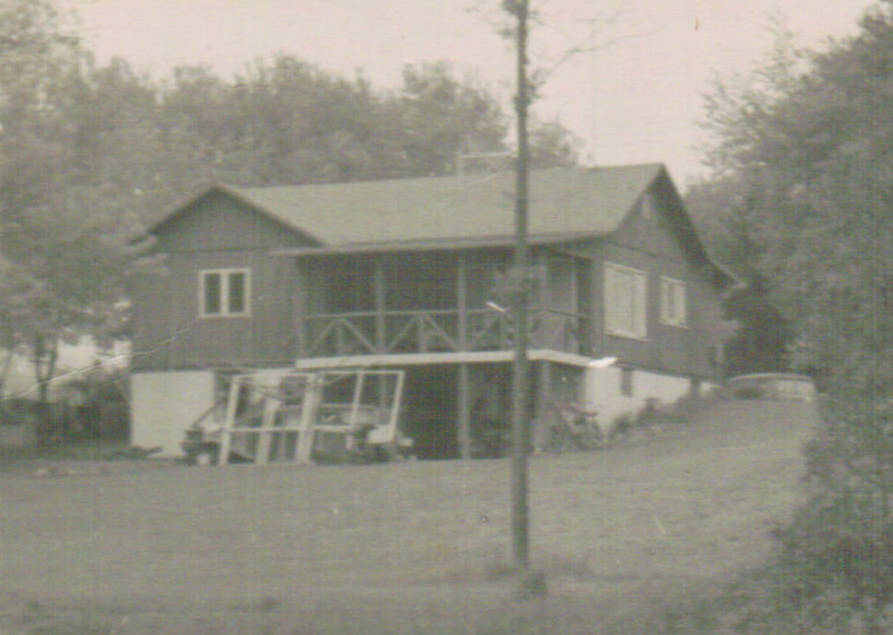
This first house is like mine.  Let’s call it “Houses as They Used to Be” and let’s call the second house “Houses as They are Becoming.”  I’ll use my boyhood house to illustrate both.  The first is of the cottage on a lake in Michigan that we moved into.  The second is the same house after my dad installed large windows on the formerly open porches.  He fussed a lot about bringing a gas line to a heater to heat the larger space.  What we discovered, however, was that the large south-facing windows helped heat the whole house.  This was before solar heat was discussed for such house heating and hot water heating, and before the eventual solar cells that harvest sunlight to create free, clean, renewable electricity.
Read more

From Passive Tolerance to Dynamic Mutuality

The issue I wish to address today involves the inevitable tensions that can grow between the good souls of a church or fellowship.  My concern is twofold: how do we maintain and improve a dynamic, satisfying fellowship for all of us, and how do we model the dynamic mutuality possible in a pluralistic democracy?  These issues go to the heart of our congregational and societal relations.   I’m glad I don’t have any particular complaint or crisis in mind.  This really has to do with…

Read more

The Widow’s Mite and the Widow’s Might

I’m not one to prove a point by quoting scripture, as if it puts the wisdom in us, but the Widow’s Mite story says so much about the reality of our country’s economic relations I just have to use it. Luke 21 tells of Jesus observing the collection bowl at the temple. A rich Pharisee makes a big show of putting in a relatively large amount. A widow meekly puts in a mere mite. “See,” Jesus says to his followers, “she gave more, for she…

Read more

Selfish, Selfless, and Self-Fulfilled

“Egotists,” I joke, “are those more interested in their selves than me.” We all have egos.  We all see and work the world from the unique locus we know as “I.”  We each have our particular body, genetic disposition, situation, and story.  While I admire the quest to be egoless, I doubt it happens.  Even saints can get caught in their very spiritual ego.  And you know what’s harder than being a saint – living with one. We all know people with egos so big…

Read more

Rescuing America and Christianity from Conservatives

I’m wearing this impractical but elegant ceremonial robe to illustrate the longer and larger tradition of friendliness in American sectarian relations. Baptist deacon Norman Bennet liked what we did at the Red Hill Universalist Church in rural southeast North Carolina, a liberal Christian congregation going back some 150 years. Norm liked me so much he bought my graduation robe. He gave me it and a 12 gauge shotgun, which I also still have. Norman valued our liberal religious ways because they provide needed balance to…

Read more

Religiously Political

Announcements for November 2  “Religiously Political” with Rev. Brad Carrier (See also accompanying newsletter entry "Religiously Political prep" in Editorials) We inherit the responsibility and opportunity to tend to our own government.  We should vote, but that is the minimum we can do.  Citizens can more importantly speak their truth in community discourse.  Authenticity and honesty are the fruit, flower and seed of democracy.  Let’s remember our founder’s intent and evaluate our political directions according to our religious values and aspirations. Sermon We’re so inundated…

Read more

Religious Values in our Election (2004)

Whether we’re conservative or liberal it’s ours to tell what values we hold, no matter what we’re told. Christianity, the Renaissance, the Enlightenment, and our own beloved rights-based democracy in America - all increasingly entrusted us with our free will. We sovereign citizens should know, share and vote our own free conscience, not what someone tells us. Lately, we’re told certain religious values in the election prevailed and should prevail. We’re told that decent people in the heartland, feeling culturally ignored, voted against their pockets…

Read more

Recession’s Lessons

“Where there is no vision, there is no hope,” said George Washington Carver.  This current recession, the worst since the Great Depression, has shocked us out of the empty hope for endless free money and replaced it with the dashed hopes of missing money, lost jobs, and less happiness.  Stress signs are everywhere, from increased drug abuse and family violence to empty stores, vacant homes, and bankruptcies little and large.  Our fear circuits, worn ragged since 9-11, are roused again.  Petty crime is on the…

Read more

Passion’s Fog: a Review of “The Passion of the Christ” and “The Fog of War.”

Passion can fog the mind. We can get so roused or riled we no longer think clear or heed our conscience. We can get so swept up in lust, love or anger we think of nothing else. We can get so full of zeal we barely notice or care what it does to others. I’m not against passion. We need passion to enliven us. Like Rod Stewart’s song says, “Even the president needs some passion, passion.” The mild twinges of passion we get from watching…

Read more
Back To Top
Search