

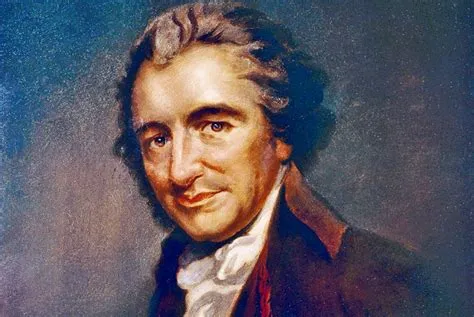
"These are the times that try men's souls," Paine wrote then, and it's true again. Thomas Paine probably won't be highlighted in the ceremonies around…

Abundance Avoided
Two liberal pundits, Ezra Klein and Derek Thompson, raise liberals’ ire by critiquing liberalism itself in their popular book, Abundance. They complain we’re blundering into scarcity when we could be choosing abundance. While conservatives fought any governmental program they resented for being too socialist, liberals hobbled our governments with well-intentioned but bulky policies. We’re stagnating because of this conflicted political landscape.
We’re like two parties in a foot race, but each one hops on one foot only, be it the right or the left. Worse, each party tries to trip up the other instead of augmenting the other’s role for mutual benefit. Klein and Thompson cede some points and offer some solutions. Their advice partially fits but falls short of better solutions.
To me, the core problem is our lack of vision. We’ve grown cynical about our supposedly self-run government instead of living up to our obligation and opportunity to run it well. We’re victims of Reagan’s sly slogan that government is the problem. Rather than enjoy the process and rewards of creative cooperation, we get lost in the drama of petty wins and loud losses. Visions of an Eden in the New World have been sullied and stymied.
Griping and whining renigs responsibility. Like it or not, we’re citizens of our self-run democratic republic, and I would add, our planet. There are no powerful kings to fix it all, no saviors to float down to provide spiritual and practical solutions. We are the living incarnation of all our ancestors’ hopes and efforts. We have inherited the ideas, habits, and technologies of a vast momentum. It’s ours to steer for better or worse.
This isn’t just daunting; it’s powerful with possibilities. Much of what we’ve recently inherited in political and scientific progress gives us the footing we need to stand tall and walk with each other on both legs. We fear scarcity but have a jump start on abundance. It already serves us better than kings and queens used to, and it could grow into an ever-improving cornucopia.
Consider reading light. Whaling used to provide that for us. If we had relied only on whales for our reading light, they’d be utterly gone now, extinct. Instead, we developed kerosene. That worked, but was smoky. We developed electromagnetism. By spinning magnets in one place, the impulse could be sent to another to do the work of spinning other motors or lighting our light bulbs. Light-emitting diodes (LEDs) could provide ten times as much light as an incandescent bulb. That was far cleaner, but it usually required burning coal to generate the steam to spin the turbines. Large dams could provide that power, but they block ancient fish runs. Enter wind turbines and solar cells. They now provide for our lighting and other needs cleanly and cheaply. Whales, sensitive and intelligent, are rebounding. We don’t need to kill them or ruin our environment to meet our needs and desires.
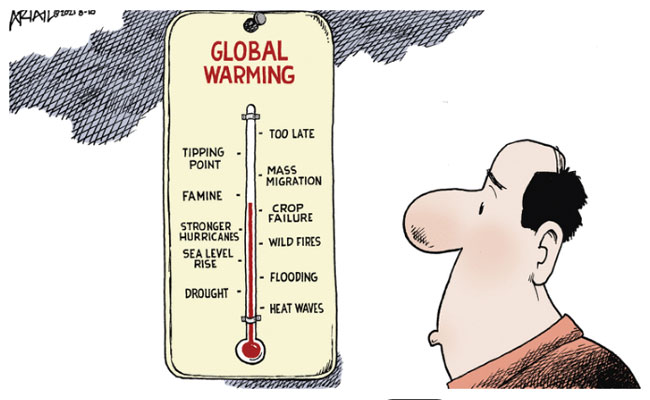
Consider transport. If we still used horses to get around, we’d develop mountains of horse poop in our cities. We developed gasoline and diesel to power our cars and trucks. Sunlight had mixed with leaves on land and plankton in the sea to slowly concentrate that energy into our coal and oil. Ancient sunlight served our hurried needs. It worked well and powered the Industrial Revolution. But just as coal clogged the skies in London when the early steam locomotives were rolling, so did gasoline and diesel heat up our upper atmosphere with what we assumed was a harmless gas: carbon dioxide. The carbon extracted from the air to create plankton and land-based plants took eons to accumulate as our fuels, but it returns to the sky in mere moments. About three-fourths of the energy exploded in our engines is wasted as heat. Millions of cars and trucks churn out tons of carbon a second, heating up what had been fairly reliable weather. We’re due to roast from this industrial blunder.
Enter electric cars and trucks. Enter ever-quicker, stronger, lighter, and cheaper batteries. This raised concerns about the limited supply of crucial components in the overall system, prompting a series of solutions. Scarce lithium batteries were soon replaced with common sodium batteries. Even electric airplanes are being built that are both quiet and clean. About a third of the enormous challenge of global warming can be met just in the transportation sector.
If whales had been hunted to extinction, we’d know them only in our guilty history. It’s easy to forget the clogged skies in London at the dawn of the Industrial Revolution, and it’s understandable that that same forgetfulness applies to Los Angeles. It was so horrible that California took on the huge and elusive task of cleaning it. California’s CARB (California Air Resources Board) set auto emission standards so demanding that electric cars were developed and deployed in ever-greater scale. Shenzhen, China, has quickly deployed 100% of its 16,000 buses and 22,000 cabs as electrics. Their dirty air is cleaned. They’re quickly accomplishing what we’ve barely started. Clean air is invisible, easy to forget how dear and vital it is to us.
It’s easy to forget what the original prairie was like. Roots dove deep. Once plowed up, that topsoil blew away. Hard to remember abundance once it’s gone. How abundant could our soil become? How elaborate and giving could our streams and oceans become? How fed, freed, and well could we humans live, all of us, were we to envision and create universal abundance? There will always be rich and poor, but what if the poor had assured access to their basics? What if we not only achieved sustainability, but clean, renewable, reliable abundance?
Hard to envision abundance from an endemic state of anxiety over scarcity, stuck in hostility and conflict, leading to typical stumbles. Are we more comfortable with dystopias than utopias?
Klein and Thompson open their book with a simple idea: that we can build and invent more of what we need. They admit: “It reads, even to us, as too simple. And yet, the story of America in the twenty-first century is the story of chosen scarcities. Recognizing that these scarcities are chosen – that we could choose otherwise – is thrilling. Confronting the reasons we choose otherwise is maddening.”
I grew up with parents reeling from the Great Depression. Dust bowls, soup lines, and suicides – all these formed the scarcity mindset we kids heard dimly about. We didn’t realize how abundant things were in the 1950s. Our worries were more about hiding under our desks from impending nuclear war, not getting measles while putting up with Chicken Pox as inevitable, and feeling privileged for not having to live in an iron lung due to polio. We heard gratitude for FDR’s Social Security, only to see it resented and undermined by a relentless campaign by the Republicans towards antisocial insecurity.
Friends of my parents had a child who was the victim of the thalidomide blunder. Her quasi-hands came straight out of her shoulders. No arms at all. Thalidomide was developed as a mere tranquilizer for pregnant women experiencing anxiety, morning sickness, and trouble sleeping. When taken between 20 and 40 days of pregnancy, it resulted in ear, eye, brain, heart, and limb deformities. Almost half would die shortly after birth. I felt sympathy for Margaret, and I took her to a dance. (She went on to marry a man similarly challenged, and they went on to have normal, healthy babies.)
Fortunately, Francis Kelsey, of the U.S. Food and Drug Administration, blocked its distribution domestically. A governmental agency helped protect Americans from what the free market was poised to profit from. Government, instead of being stacked by corporations, could protect us from corporations. Corporations have no obligation or intention to serve the people and the environment; the government should serve both.
Yet, we inherit the shallow slogan that “government is the problem.” It can be, as we’re seeing this dreadful year. But such passive cynicism relinquishes our remembering that our government should be “us, taking care of ourselves.” “It is childish to declare government the problem,” say Klein and Thompson, adding, “It is just as childish to declare government the solution.” This needn’t be a false dichotomy. We’re all in this together.
Together, but conflicted. Among industrialized countries, our health care is the least effective and most expensive. Knee-jerk abhorrence of “socialism” keeps doctors scarce and insurance companies wealthy. In 1967, it took three lawyers per 100,000 to enforce federal laws. By 2014, it took forty. In 1964, 77% of our population thought the government was doing the right thing. By 2023, it had dropped to 16%. The U.S. created 37% of its own semiconductors in 1990, but only 12% in 2020.
The world’s first silicon solar cells were developed at Bell Labs in 1954. To light and heat your home with those cells at the prices then would have cost a million dollars a day. But such inventions at scale end up costing far less. A rooftop of such cells pays for itself in less than a decade. Foreign countries and Texas are deploying them on a grand scale. However, they remain a suspicious technology ever since Reagan tore the solar hot water panels off the White House, and the fossil fuel industry invested in the FUD (Fear, Uncertainty, Doubt) that still spooks Americans.
Germany deployed them in the 1990s, allowing homeowners to earn money for excess energy from their rooftops, and coverage has since risen from 3% to 30%. China took on manufacturing them at scale. They now create 70% of the world’s supply at a 90% reduction in cost. China now supplies most of the solar panels, wind turbines, and electric vehicles used on the planet. The U.S. blocks their entry to our country via tariffs. Meanwhile, China forges economic footholds elsewhere. In 2025, China added twice the solar capacity as the rest of the world combined.
Fifty years of developing computer chips have made them a billion times less expensive. We use them in our houses, cars, phones, and computers, but they’re mostly made in Taiwan.
Ours is a frequent story of success that goes mostly untold. The invisible goes unnoticed. Klein and Thompson claim, “Air pollution kills between 7 million and 9 million people each year; that is six or seven times the death toll from traffic accidents and hundreds of times the death toll from war on terrorism or all natural disasters combined.” California’s cleaner air has prevented an estimated 400,000 premature deaths. Nationally, our car emissions are down 90% since 1970 (when we used to breathe the neurotoxin lead). Who remembers the sooty air, flaming rivers, and DDT of that era as they mock “regulations”?
It was the government’s “pull funding” that led to the rapid development of the new mRNA vaccines by three companies. Upfront subsidies led to far greater future profits. Free shots led to rapid adoption. The unvaccinated were dying at a rate ten times higher than the vaccinated. A $40 Billion investment helped prevent twenty million deaths worldwide. One estimate is that the free shots saved $1 Trillion. Yet, Operation Warp Speed was ignored by both parties. Democrats didn’t want to give the success to Trump, and Trump didn’t want to weaken his anti-vax cohort. Despite the progress, the anti-government meme prevails.
Klein and Thompson named the irony: “It’s odd to claim that a program that expanded government powers succeeded by proving that one should never expand government powers.”
Government is often better at meeting and solving problems than the private sector alone is. Reviewing the book, The Boston Review noted that only one in ten rural residences had electricity in 1935, but nine in ten did by 1955. Privatized electricity providers estimated that it would cost up to $2,000 per mile to string new wires. Roosevelt’s REA (Rural Electrification Administration) got it done with local cooperation for $430 per mile.
The Empire State Building in New York was constructed in one year. In 2024, the Biden/Harris infrastructure bill allocated $7.5B to install 500,000 electric vehicle charging stations. Two years later, only seven were up and running. The Transcontinental Railroad of the 1860s, 1800 miles long, took only six years to finish. It now costs us some $609M to construct a kilometer (about 0.6 miles) of rail here. Portugal does it for $96M. California’s 500-mile high-speed rail system still isn’t complete. Meanwhile, China has built more than 23,000 miles of it.
We’re floundering. Too much bureaucracy. Too many lawsuits are hampering road and housing projects. Too much ridicule and distrust towards our politicians and government workers. In China and Singapore, civil service workers are held in high esteem. Here, demonizing the government is a national sport. One of the only ways for citizens to express their frustration and anger is to vote. In areas where vast demographic variation has to be “represented” by a single congressman, that vote is often futile.
As Klein and Thompson critique liberalism, they toss in far-fetched schemes like “green hydrogen” and machines that extract carbon from the air. They give a nod to solar, wind, and EVs, but don’t clearly explain how quickly such innovations could address many of humanity’s challenges. They rightly take Elon Musk to task for “slashing what government does rather than reimagining what it can do.”
Instead of waging a needless war on Iran on behalf of the international criminal Netanyahu, instead of wasting energy to seize all oil energy to continue wasting it, instead of mocking global warming as a “hoax” and impeding the deployment of solar, wind, and EVs, what if we were to work together domestically and internationally to deploy every technology that protects the environment and us towards an abundance we dimly yearn for and could achieve?
The guru Anandamurti once claimed, “The future will be better than we can now imagine.” How rich and productive the soils? How ample and resplendent the oceans? How secure, comfortable, and creative the people? How glad and successful a humanity that takes the future seriously and creatively? Why stumble into petty squabbles when abundance avoided could become an embarrassing and dangerous fault of the past? What if abundance could serve all of us?

Related Posts


GOOD writing Brother! I think now that tRamp has given major corporations a good taste of control, capitalism and AuthoritarianISM is here to stay.. They aren’t going to give up THEIR abundance to appease the little people without a fight! They have all they need and truly don’t need the people any longer.. Hence the 9 wars tRamp and Netenyahoo have done in two years alone… The people, especially those liberals, matter not. I think we’re on our own, unless THE PEOPLE vote all Democratic PROGRESSIVE LIBERALS. We MUST.. I guess we’ll see how Texas turns out this election. 😉
Yes, it seems that complacency and cynicism have replaced vision and aspiration. I appreciate that this essay points out our potentials for restoring abundance — thanks!
Great writing! Good suggestions! I don’t know about returning to horse and buggy, but the thought led me to ponder if our faster and faster modes of transportation is a blessing or a curse? We not only waste fuel and damage the environment with our modern transportation. We have lost much of the spirituality that came with slower lifestyles. We have all these time saving devices and we can zip across oceans and continents, yet we seem to have less time than ever! Family meals were once unhurried daily rituals filled with conversation. Sunday afternoons were once devoted to leisurely… Read more »