

"These are the times that try men's souls," Paine wrote then, and it's true again. Thomas Paine probably won't be highlighted in the ceremonies around…
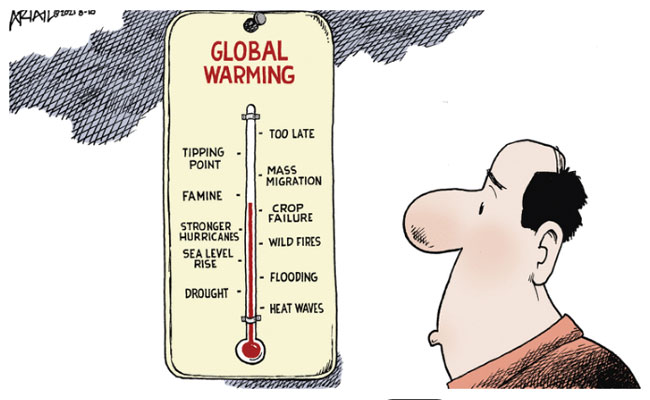
Hoax?
Rebuttal to the letter in Ashland, Oregon’s Sneak Preview: Is Carbon the Culprit?
(Please see the original letter I am rebutting and Dr. Alan Journet’s reply to it, both pasted in below. The editor of the Sneak Preview declined to print this reply. He had so many replies, he is opting to sum them up in a future issue. I will add that summary to this post when it becomes available. As always here at Earthlyreligion, your replies, reactions, and further thoughts are welcome.)
I was embarrassed for the Sneak Preview that it printed Randy Voris’ ridiculous diatribe about climate change. Is he a local person expressing his opinions, or is he a shill for such industry denialism, such as what the Carbon Dioxide Coalition does, as Dr. Alan Journet suggests in his rebuttal? (I urge those interested in the “debate” to review Journet’s longer scientific rebuttal at the bottom of his pertinent reply to those typical denialist talking points.)
My reply to Voris isn’t as measured or as polite as Journet’s. Voris claims to be “educated in the sciences” without providing credentials, yet dares to claim the scientific consensus is “misguided hysteria,” funding “billionaires” selling “fiction.” His whole argument pulls ignorant slogans from the internet, often repeated, even funded, to spread unethical lies about this enormous challenge to humanity’s problematic plight. The droughts and fires, rain bombs and sea rise, the impacts on life on land and in the oceans, the injury to agriculture, and the current and impending financial costs are all glibly ignored.
Voris appropriates a few ideas from science when describing photosynthesis, but stops short of the pertinent point. Yes, plants take carbon dioxide from our air and release water in the process. But the point is that widespread, slow processes move carbon dioxide from the air into the leaves, limbs, trunks, and roots of the plants. Firewood is made mostly of air. When we burn those slow-growing plants, a small amount of ash is left over, but the bulk of it goes suddenly back into the air, specifically the high atmosphere, where it prevents heat from escaping, the long-known greenhouse effect. Ancient carbon stores, eons in the making, are being rapidly released into our only atmosphere via wood, coal, gasoline, diesel, and aircraft fuel, where they linger for hundreds of years.
That imbalance in our climate began before fossil fuels (gasoline and diesel) started powering our industry and vehicles. Humanity’s harvesting and burning off of our forests began removing Earth’s lungs in this grand balance. Even just steam power required wood, coal, or oil to make and run our railroads. How many trees were required to create railroad ties? How much coal to create the rails and engines? How much to fuel railroads, ships, and industry? When we then switched to ICE (Internal Combustion Engines), blasting carbon back into our air went all the faster and more voluminous.
Voris absurdly claims it takes 10 times as much oil to produce an electric car (Tesla) as a pickup truck (Ford 150), without supporting his wild claim. Journet correctly states that both vehicles should be evaluated for the oil and other resources used for their creation, operation, and recycling. Electrifying our transportation and supplying that electricity from solar and wind would go a long way to fix our recent technological blunder and threat.
Voris promotes methane (natural gas) as safe, completely ignoring the near-weekly news reports of houses and apartment buildings exploding from this “natural” dangerous gas.
Then he rightly claims carbon dioxide is needed for plant growth, and offers some far-fetched and irrelevant numbers for how more is better, claiming “the only consequence being greater crop harvests.” He just ignores the rapidly increasing troubles caused, far faster and greater than any other climate shift Earth has ever experienced. Those troubles are coming in faster and worse than the climate models predicted.
Not to worry, he goes on, citing the atmosphere on Mars and Venus, ignoring their thin or dense atmospheres and the catastrophic potential in our Goldilocks middle place in between both, claiming it is “nonsense” that a relatively rare gas could have an effect here. Pay no attention to the runaway greenhouse effect on Venus with its hot 865 F. degree consequence.
Finally, he correctly notes that concrete and asphalt contribute to heat, and that water vapor has the greatest thermal conductivity. But he includes truly trite and irrelevant comments, such as that the climate is always changing, that water is important to life and to a balanced climate, and that we wouldn’t exist without carbon dioxide. All true. But the carbon dioxide we exhale doesn’t alter Earth’s climate, whereas the rapid, industrialized “exhaling” of it does.
Exxon/Mobil knew fossil fuels created global warming back in the 70s. They participated in understanding and adapting to it. But in the 80s, they switched to denial and lies, adopting the same propaganda as the tobacco industry had used to forestall the decline in cigarette sales. I don’t blame them for providing the fossil fuels we wanted and used. I blame them for financing the lobbying and propaganda, such as seen in Voris’ shallow, slippery trickery. To the extent they funded such denialism and delay in addressing this transnational assault on humankind’s formerly reliable weather, is the extent to which I think they should be held liable for economic damages, proportional to the damages so far and impending.
I value the Sneak Preview’s providing room for this “debate.” As Trump successfully delivers on his expected bribe of a billion dollars to ruin clean, renewable energy and electrified vehicles, and our TV stations, social media, and newspapers increasingly are owned by his billionaire buddies, blatantly slanted to keep climate denialism widespread, the need for independent news, even in smaller places like the Sneak Preview and KSKQ radio are all the more vital to our understanding, democracy, and our only, precious and vulnerable environment.
(End of my reply. Here are Randy Voris’ and Alan Journet’s letters,
both unedited by me.)
Carbon Dioxide is Not the Problem
by Randy Voris
I’m not sure whether being educated in the sciences is a blessing or a curse. There is some misguided hysteria over carbon dioxide (CO2), and trading in carbon credits has created billionaires who are selling nothing more than a fiction.
Certain natural substances are responsible for life on planet Earth. One of the life-giving processes is photosynthesis. Ultraviolet light from the sun activates chlorophyl in plants which then extract carbon from carbon dioxide in the atmosphere thereby supplying oxygen to the atmosphere. Plants require water, sunlight, soil and carbon dioxide in order to grow. We require plant life in order to exist. Without photosynthesis there would be no life on Earth.
One hundred barrels of oil are required to produce one Tesla electric car whereas only ten barrels of oil are needed to manufacture one gas-powered Ford F150. Excavating massive amounts of soil is required to dig up the raw material to make one EV battery. Once the ore is extracted, toxic chemicals and thousands of gallons of water are needed to refine the ore into pure lithium, cobalt, nickel, manganese and copper to produce EV batteries.
The reality is that manufacturing electric vehicles causes significantly more environmental damage than making gasoline and diesel powered vehicles.
Natural gas, 95% methane (CH4), is the cleanest form of fuel known to exist. Hydrogen is the most abundant element in the universe and when burned leaves nothing behind. Nature’s gift is attaching one carbon atom to four hydrogen atoms making natural gas safe to compress and/or transport in pipelines. The only byproduct of burning natural gas is carbon dioxide. As explained above, carbon dioxide being the key to photosynthesis is necessary for life and certainly not a pollutant.
Commercial greenhouses increase carbon dioxide to as much as 5,000 ppm (parts per million) to enhance yield. Considering that CO2 does not become toxic until it reaches 30,000 ppm, at the current 420 ppm or 0.042% (forty-two thousandths of one percent) of the atmosphere, there is plenty of room to add carbon dioxide to the atmosphere with the only consequence being greater crop harvests.
One would think that since not one of the alarmist’s predictions of disappearing ice, feet of sea rise and soaring temperatures has materialized that we would become tired of those crying wolf when there is no wolf. For political reasons carbon dioxide has been demonized as a greenhouse gas driving climate change. The atmosphere on Mars is 98% carbon dioxide. There is next to no greenhouse effect on Mars. With only 0.042% of Earth’s atmosphere being CO2, it’s nonsense to believe a gas that rare would have any effect on climate even if it was a greenhouse gas, which it isn’t.
Point out a time in Earth’s history when the climate was not changing. You can’t, because it is always changing and we have little to do with it. Our contribution is mostly construction of asphalt and concrete which have significant thermal conductivity, absorbing heat during the day and emitting that heat back into the atmosphere at night.
Of the ten most abundant gases in Earth’s atmosphere, carbon dioxide has the least thermal conductivity with water vapor (H2O) having by far the greatest thermal conductivity. Water vapor is the only greenhouse gas of significance on Earth and without it this planet would be a ball of ice.
Carbon dioxide and the greenhouse effect are our friends without which we would not exist.
What Science Tells Us About Randy’s Claims,
by Alan Journet, retired scientist
It is not possible in a few column inches to address in detail all of Randy’s claims; I offer short broad-brush scientific responses to his claims.
Photosynthesis is assuredly a natural process that requires carbon dioxide and is critical to the ongoing success of life on the planet. But, contrary to Randy’s assertion, it does not involve ultra-violet light (wavelength 100–400 nanometers) because that contains too much energy and would destroy plant cell DNA. Rather it involves sunlight in the visible range of wavelengths from 400 to 700 nanometers. Contrary to the process Randy offers, photosynthesis is better described as extracting hydrogen from water and inserting this into carbon dioxide.
I acknowledge that Randy is correct that carbon dioxide, though in combination with other gases and the greenhouse effect, has produced a planet warm enough to allow the evolution of life as we know it. That warming occurred before the industrial revolution over millennia following the most recent ice age. The industrial revolution resulted from our learning how to use fossil fuels to drive machines. This allowed us to engage in less manual labor as machines took the load.
Since then, our use of fossil fuels to drive machines has successfully pumped substantial additional greenhouse gases into the atmosphere pushing the temperature up from what it was. If we accept that pre-industrial revolution greenhouse gases, in even smaller concentrations than today, warmed the planet prior to that period, it is only logical to accept that increasing their concentration since then would cause further warming.
Randy accurately identifies the concentration at which carbon dioxide becomes toxic, but this has no relevance to the issue at hand. It may be that some commercial greenhouses increase carbon dioxide concentration to 5,000 parts per million (ppm) in an effort to stimulate plant growth. If they do, this would be pointless since carbon dioxide concentration starts to depress plant growth at about 2,000ppm.
Randy is also correct in that carbon dioxide comprises 98% of the Martian atmosphere; Mars is, indeed, a frozen desert. However, the atmosphere of Venus, a super-hot desert, is 96% carbon dioxide. The difference is that the atmosphere of Mars is very sparse, while that of Venus is very dense. Carbon dioxide behaves as a greenhouse gas on both planets but has much greater effect in the denser atmospheres of Venus and Earth than in the sparse atmosphere of Mars.
While water vapor certainly is a greenhouse gas, it is absolutely not the only critical greenhouse gas. Importantly, water vapor molecules last in our atmosphere ten or fewer days while methane lasts for about a decade, nitrous oxide for a century, and carbon dioxide for centuries. Though having less warming potency than water vapor, the longevity of these other gases more than compensates for their lower warming capacity.
In discussing natural gas, Randy correctly reports that it is 95% methane but then discusses how burning hydrogen leaves nothing behind as though this is relevant to natural gas combustion. The point is that, when using natural gas, one is burning methane and this emits carbon dioxide. However, in addition, another major problem with natural gas is that its extraction, processing, and transmission result in methane emissions, and methane is much more potent as a warming agent than carbon dioxide. The result is that burning natural gas is equivalent climatically to burning coal.
I have no idea the source of the claim that a Tesla takes a hundred barrels of oil to build whereas a Ford F150 truck takes only ten. He is making entirely the wrong comparison; the data he provides may be accurate but they are irrelevant. The critical comparison is not the manufacturing emissions cost of a vehicle, but the overall lifecycle emissions. Thus, in terms of greenhouse gases, we have to total and compare the manufacturing emissions, the lifetime operating emissions and the disposal emissions. This assessment reveals electric vehicles always come out superior to internal combustion engine vehicles.
Randy claims that the predictions of disappearing ice, feet of sea level rise, and soaring temperatures suggested by climate science have not materialized. These unfortunate claims are repeated ad nauseum by climate science deniers without their apparently ever consulting and reporting the actual publicly available data. In reality, the reduction in extent of Arctic sea ice has been much greater than was indicated by model projections.
Note: Retired climate scientist Richard Lindzen and retired Physicist William Happer recently posted on the fossil fuel-funded Carbon Dioxide Coalition website a diatribe promoting many of the claims Randy offers, including several others. I submitted an extensive response to that, and it is available at: socan.eco/critique-of-lindzen-happer.
Here ends those initial letters and my reply to them.
As mentioned above, your input on this issue is welcome here.

Related Posts





Thanks Brad. I appreciated the responses both you and Dr. Alan Journet. Although excessive carbon dioxide gas is the cause of the runaway green houses conditions on Venus, comparing Venus to Earth is akin to apples and oranges. Venus’ proximity to the sun and the very slow rotation of Venus are the primary reasons for the intense carbon dioxide buildup on Venus. However I would like to share with your readers that our food choices very much impact Earth’s environment and contribute to green house gasses. It is estimated that agriculture is responsible for 17 – 32 percent of human-induced… Read more »
Vernon, I welcome this long, thoughtful, detailed reply. Did you write this or use it from another source? If from elsewhere, that’s okay, but please reference it. Your mention of hog farms in eastern North Carolina makes me consider that you wrote it. After all, we met there. I did the Climate Reality Leadership Corps training with Al Gore in 2012. I remember a small group of protesters, concerned that he was avoiding the agricultural contributions to global warming. (I prefer the term “global warming” to the ambiguous “climate change.”) Your explanation of how it does so is an important… Read more »