

Rebuttal to the letter in Ashland, Oregon's Sneak Preview: Is Carbon the Culprit? (Please see the original letter I am rebutting and Dr. Alan Journet's…
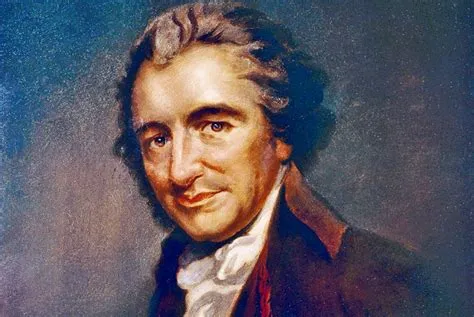
Our Founder and Our Flounder
“These are the times that try men’s souls,” Paine wrote then, and it’s true again.
Thomas Paine probably won’t be highlighted in the ceremonies around the 250th, but he should be. As we try to celebrate the 250th anniversary of our country’s founding, let’s remember this founding father, especially in light of our current embarrassing and dangerous plight.
His nickname was Common Sense.
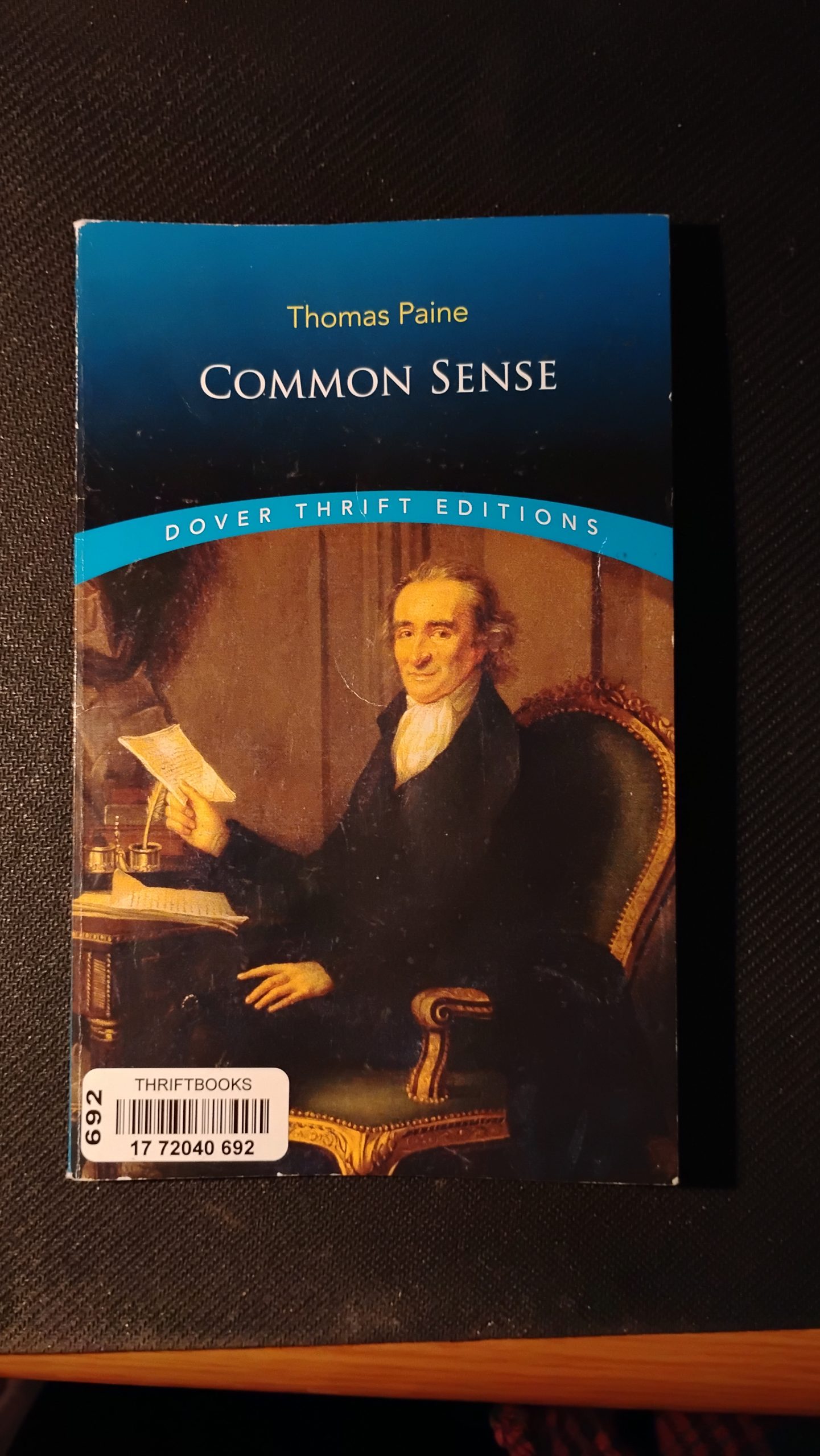
His plain-talk pamphlet “Common Sense,” published just six months prior to the 4th of July, 1776, sparked the momentum of sporadic rebellions into the Declaration of Independence, a daring document, the spiritual soul of our nation. He may have helped write that, too, for he was well-liked by Benjamin Franklin, Benjamin Rush, and especially Thomas Jefferson. His ideas and values led the way then and since.
Yet, we flounder.
“Europe, and not England, is the parent country of America,” he wrote. “[T]here is something very absurd … in supposing a continent to be perpetually governed by an island.” His gripe wasn’t just geographical; he hated English ways and favored humanistic European Enlightenment values instead.
While growing up poor there, he witnessed the British Enclosure Movement, in which aristocrats fenced off former common lands that the poor needed for gardens and game.
The rule of monarchical law claimed all resources for the landed gentry and punished violators harshly. Take some grain or hunt a deer, and the punishment could range from being stuck in public stockades to being hanged. Villagers would assemble to enjoy watching someone dangle from a rope to die. It entertained and warned. The nobility owned the land and the law.
“This is the general character of aristocracy,” Paine wrote, “or what are called Nobles or Nobility, or rather No-ability.” He hated the assumption that those born to royalty and wealth should rule. “This species of feudality is kept up to aggrandize the corporations at the ruin of towns; and the effect is visible,” he complained.
Aggrandize the corporations at the ruin of towns? Sound familiar?
Virtue isn’t inherited or guaranteed. Nor is our country if we take it for granted.
Paine favored the sovereignty of free and equal people, not some magically divine power supposedly in a king or the presumptive arrogance of church power. (See my two essays on my seventh great-grandfather and grandmother on these as iconic in those crucial earlier trends that formed our country.)
“A constitution is the property of a nation, and not of those who exercise the government,” he asserted. It is established on “the authority of the people.” Faith in people is what we’re founded on, not to be relinquished to those who usurp and misuse it.
He envisioned free, equal, valued people, men and women, property owners and slaves, as a new sort of infusion of the Almighty’s presence in a New World. “Independence is my happiness,” Paine wrote, “my country is the world, and my religion is to do good.”
He suggested the very title the United States of America. His vision was prophetic: “What Athens was in miniature, America will be in magnitude,” and he added a hopeful, expansive note: “The cause of America is in great measure the cause of all mankind.”
Lofty beginnings; lousy results lately.
Lately, we’ve been wracked by a deliberate takeover of our government and society. Well-funded corporate lobbyists, entire radio and television networks, many if not most newspapers, and especially social media have us divided into angry factions. Pretend patriots vehemently waved the flag for vague and riled causes, and in so doing, defiled it. A violent mob attacked our sacred center, smashing windows, threatening murder, injuring many, and smearing their shit on office walls, yet the would-be king who called for it pardons them all and now seeks to fund and employ them.
Imagine if Barack Obama had riled up black and brown people to do the same. What would the response have been to that?
Sacred buildings are suddenly smashed down. Brown-skinned refugees are denied sanctuary and their countries called “shitholes.” A new presidential police force, ICE, with a budget that exceeds those of the combined budgets of the FBI, DEA, ATF, U.S. Marshals, and the Bureau of Prisons, invades our communities, backed by ominous huge new prisons coupled with a sadistic turn in how the incarcerated are treated. Voting itself is made difficult, and gerrymandering of congressional districts makes it futile. Preannounced accusations of fraud reek of projection. They accuse of what they do.
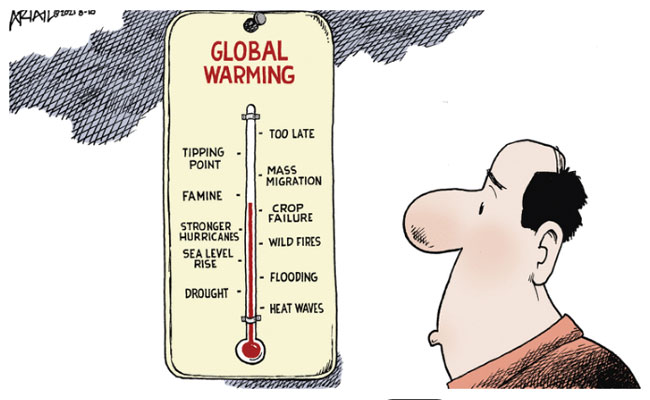
The enormous, humanity-wide challenge of global overheating has been ignored, an obvious payoff of the public bribe of billions of dollars from the old-money fossil fuel corporations. The concern is mocked, and its fixes are blocked.
His glamorous Secretary of Defense, now elevated to the War Department, fires top generals en masse without explanation. Mark Twain’s “War Prayer” was at least sarcastic, unlike Hegseth’s presumptive, God-on-our-side call to violence. The Supreme Court expanded Trump’s whatever-you-want ways to put loyalists and lackies in charge of formerly independent agencies. Some 8000 positions are vulnerable to his accusatory whims.
“The Court gives the President a power unknown even to the English Crown against which the Founders revolted,” Justice Sotomayor recently wrote in dissent, “elevating him above his once-coequal branches by transforming a duty to take care that the laws be faithfully executed into a license to act in defiance of those very laws.”
Duty transformed into license for defiance? A new presidential police force (ICE), lackey generals commanding the military, firings for partisan and anti-DEI purposes – all classic authoritarian tactics – and we’re supposed to celebrate the 250th as if ordinary and desirable?
It is shameful, embarrassing, and dangerous. It’s as if foreign governments like Russia, Israel, and even Iran have the vile scoop on our president, something worse than mere pee tapes, holding him hostage, and thus, us, too. He enriches his own family and a small inner circle of billionaires while mocking “affordability.” A more blatant and divisive cult of wealth and power has never taken over to this extent.
Much of that populist wave rides on egotistical cynicism. Many resent, distrust, and undermine our governmental functions. They think they’re smarter than scientists and accuse scientists of conspiratorial intent. Well-funded, adamant but ignorant opinions misinform and mislead. A cheap, passive, and suicidal meme has prevailed since Reagan at least: “government is the problem.” The relentless campaign of ridicule and accusation against Biden and anything liberal, augmented by social media algorithms and propagandistic mainstream media, worked.
Tom Paine’s warning has come too true: “Suspicion is the companion of mean souls, and the bane of all good society.” The founders were wary of political parties lest they become angry factions.
We’re faltering.
Thomas Paine repudiated his copyright advantage of profiting from the sale of his popular Common Sense, returning what he did earn to a fund to supply mittens for George Washington’s troops. He was more interested in ideas than income. He bequeathed the land given him by New York State to a needy widow and her sons.
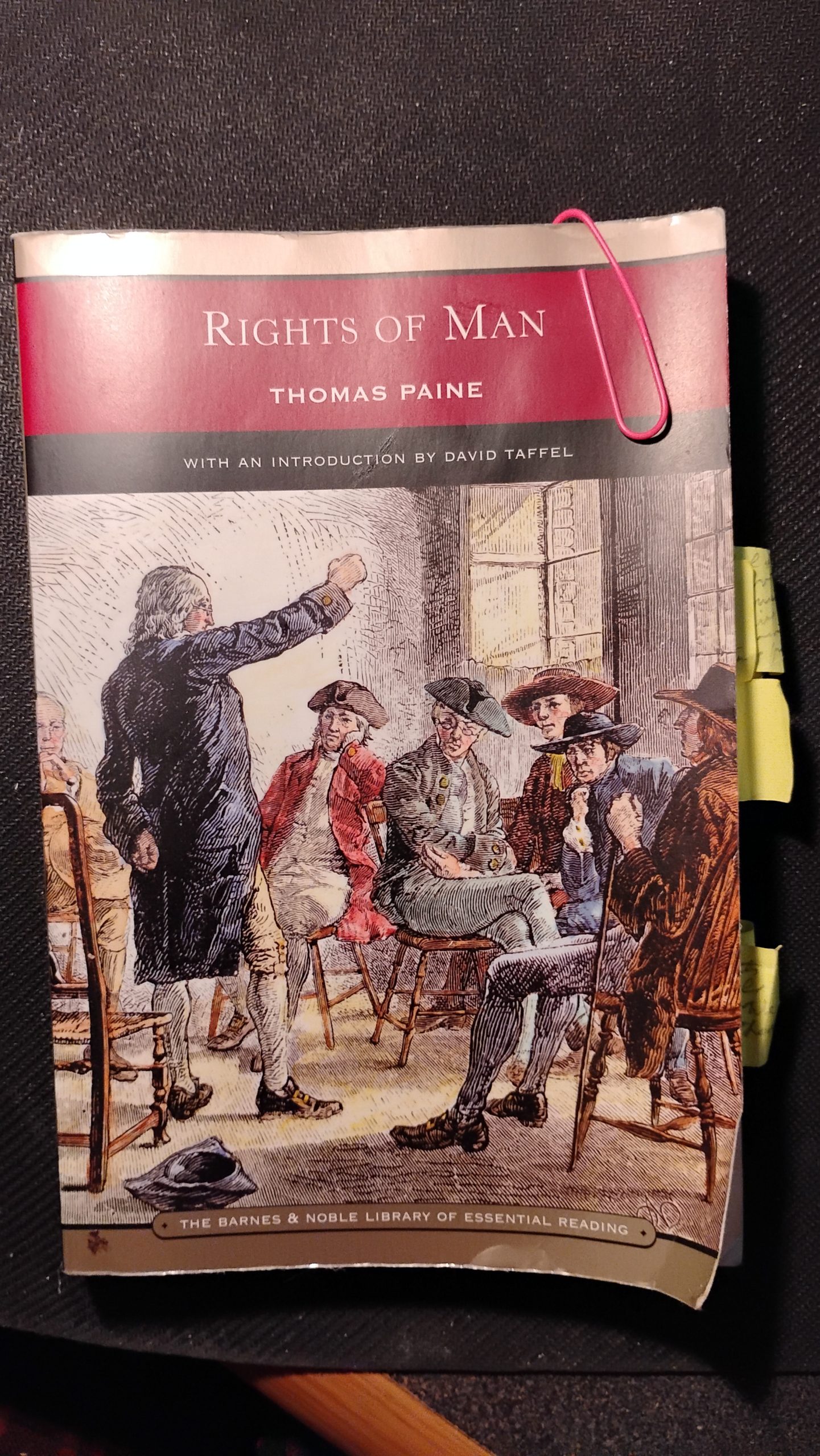
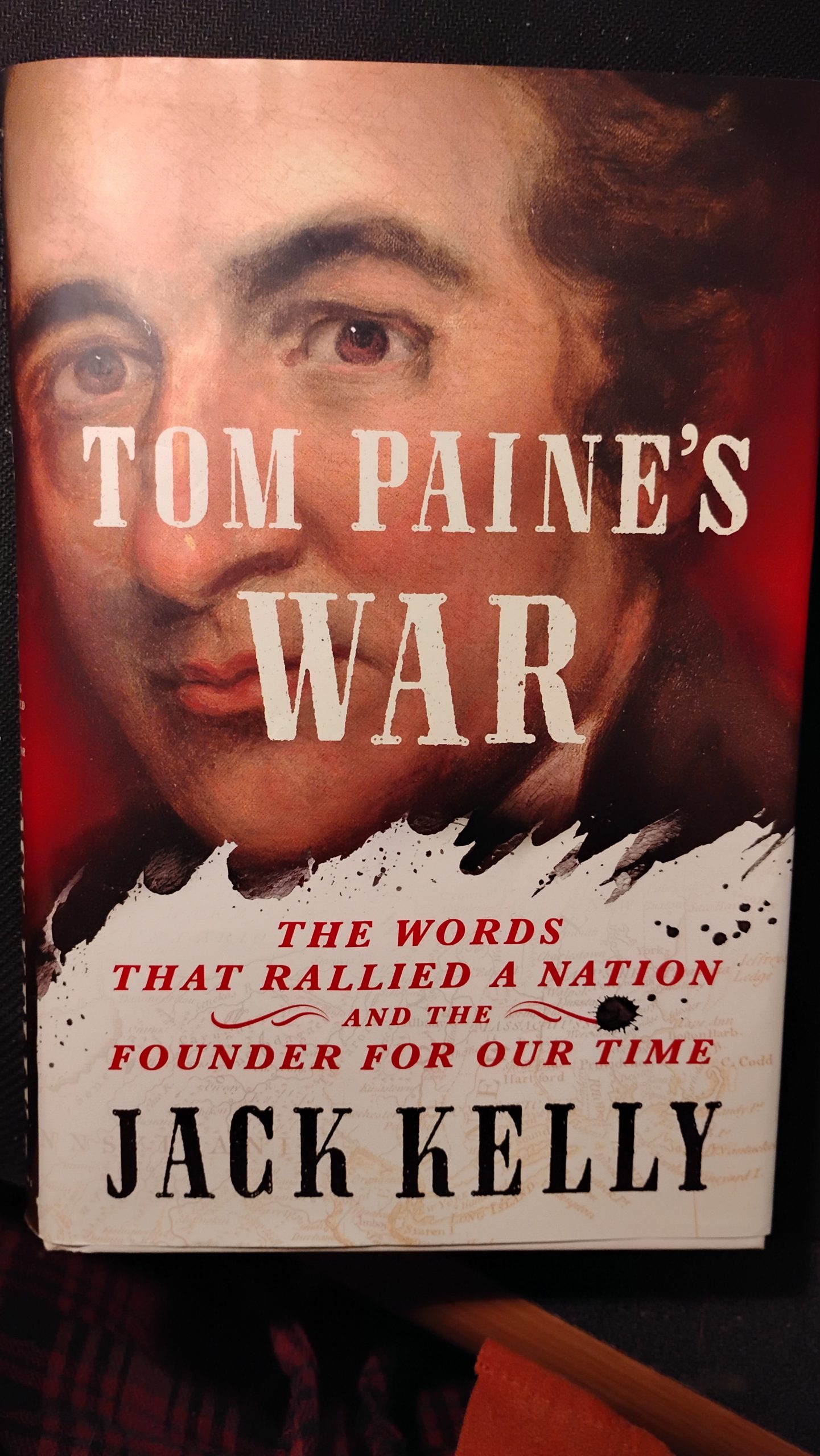
His next book, The Rights of Man, was a rally cry for helping the revolution. George Washington had it read to his troops. Paine himself joined the army. Details of that hard war and Paine’s involvement appear in Jack Kelly’s Tom Paine’s War.
When Thomas Paine died in 1809, only six people attended his burial, two of them freed blacks. Denied burial in the Quaker cemetery (perhaps for his mocking them as stuffy and boring), he was buried under an oak tree. William Cobbett, an admirer, dug up his bones, intending to rebury them in England. But years later, they were lost. His skull and right hand had been taken, perhaps as sorts of relics.
Paine was once a sort of international celebrity. He went to France as a Secretary of the Congressional Committee on Foreign Affairs and helped bring back some sixteen million livres of silver, six as a gift, ten as a loan. He helped found the Bank of America.
Bonaparte Napoleon would sleep with a copy of Paine’s “Rights of Man” by his bed. In it, Paine admired the French attempt to create such rights. (He later called Napoleon a “complete charlatan.”) He advocated the total abolition of hereditary monarchy, which earned him a rebuke from John Adams, who called the book “a crapulous mass.”
His book was a detailed argument with Edmond Burke, who rightly feared the excesses of the French Revolution could come to English monarchists. Paine didn’t hate England. “It is the commerce and not the conquest of America, by which England is to be benefited,” he admitted. But he advocated for the exile of King Louis XVI rather than his execution, which angered the radical French Montagnards and Robespierre. They accused him of treason and being a foreign conspirator.
Despite having been granted honorary citizenship in France earlier, he was sentenced to Luxembourg Prison and condemned to the guillotine. A quirk of fate saved him. Those sentenced to be beheaded had the outside of their doors marked with a big X. But Paine’s door was open, so the mark was placed on the inside. When it came to rounding up those to be executed, his door was closed, so he was missed.
After the excesses of Robespierre’s terror, Paine was returned to his seat at the French Convention. James Monroe, as the new ambassador, had helped gain his release in 1794. But he had grown disillusioned. He was embittered when George Washington hadn’t come to his aid when he was imprisoned. He returned to the States in 1802 at the invitation of Thomas Jefferson.
Yet he was not welcomed home. Why?
Not only did he advocate for the wider inclusion of those entitled to vote by including those without land holdings, but he also wrote towards a sort of welfare for the poor and guaranteed pensions for those who had worked.
Worse, he critiqued both the Bible and Christianity in his scandalous book, The Age of Reason. Part One of that Enlightenment masterpiece was written in prison without access to his Bible. The pendulum had swung back to a reactionary America. The Second Great Awakening roused up angry rejection of his use of reason to critique religion.
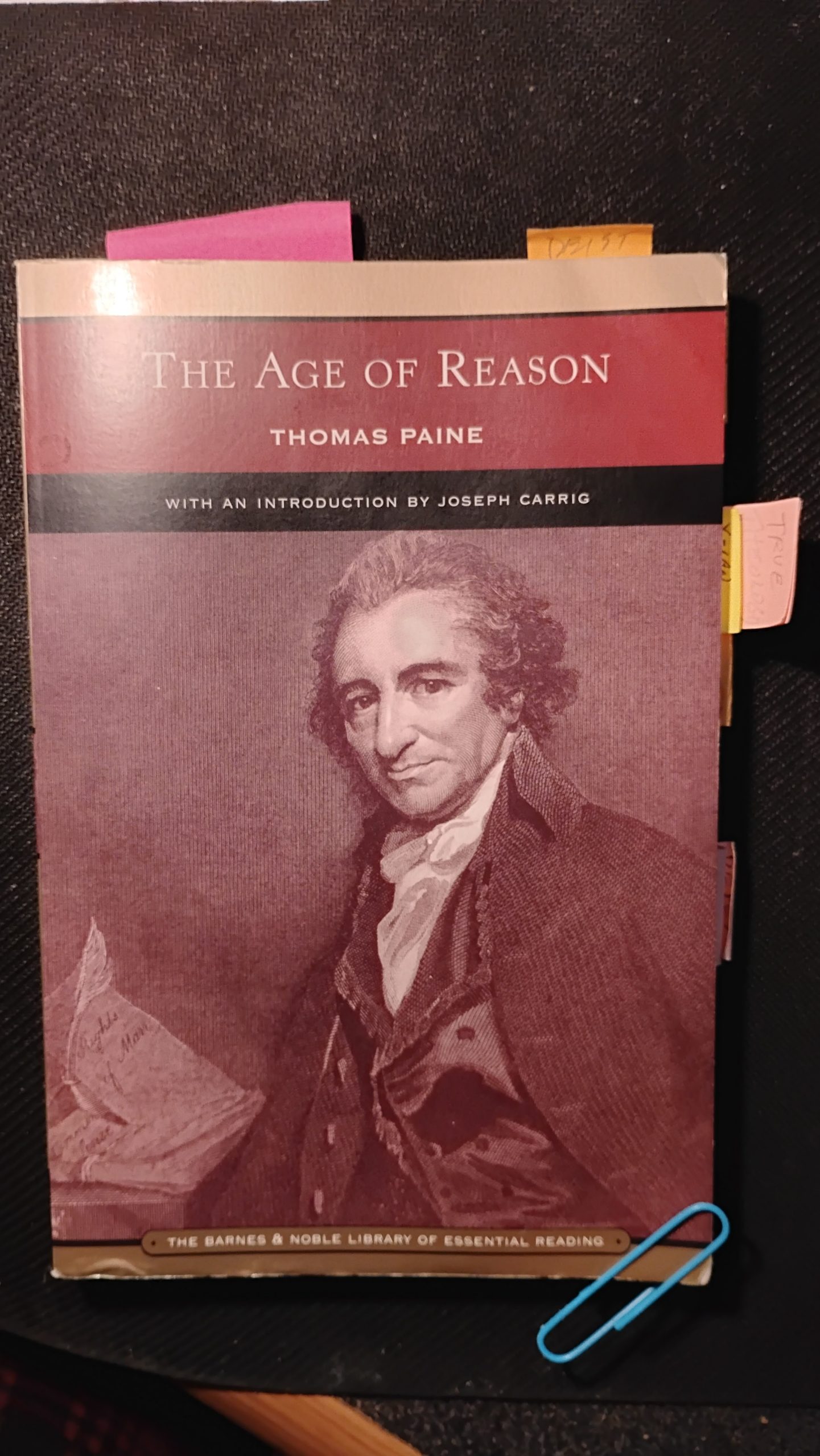
Thomas Paine believed “It is the will of the Almighty, that there should be a diversity of religious opinions among us,” a stance shared by Thomas Jefferson and protected by our Separation of Church and State.
Paine favored reason over belief.
“Ignorance is of a peculiar nature: and once dispelled, it is impossible to re-establish it. It is not originally a thing of itself, but is only the absence of knowledge; and though man may be kept ignorant, he cannot be made ignorant.”
Paine was a stubborn rationalist. “He who dares not offend cannot be honest,” he wrote. “Moderation in temper is always a virtue; but moderation in principle is always a vice.” He wanted reason to work with conscience: “And to read the Bible without horror, we must undo everything that is tender, sympathizing, and benevolent in the heart of man.”
He went on, “It is from the Bible that man has learned cruelty, rapine, and murder; for the belief of a cruel God makes a cruel man.”
He didn’t stop there. He dared to dwell on the obvious. “Whenever we read the obscene stories, the voluptuous debaucheries, the cruel and torturous executions, the unrelenting vindictiveness, with which more than half the Bible is filled, it would be more consistent that we called it the word of a demon, than the word of God. It is a history of wickedness, that has served to corrupt and brutalize mankind; and, for my part, I sincerely detest it, as I detest everything that is cruel.”
The word of a demon? I sincerely detest it? How likely would this be well and rationally received, then or even now? Yet to read his detailed objections is to admit criticism of what many believe is “the Word of God.” Rather, to him and for us, “The Word of God is the Creation we behold.” Freethought and atheism have long been a crucial part of our American society and tradition, yet who knows a crucial founder was its champion?
“He had more brains than books… more courage than politeness… more strength than polish,” wrote the 19th-century freethinking Reverend Robert Ingersoll. “He loved the truth for the truth’s sake, and for man’s sake.”
Religion can be a pernicious mechanism for getting money and wielding power. As with old books, laws, and inherited advantage in political terms, he denounced the revering of old books and presumptuous clergy in religious terms.
Don’t look there and believe that, he advised. Look into Creation itself to understand the Creator. His was an appreciation of deism. The physical universe is the ultimate revelation of a supreme, benevolent Creator who does not withhold “that abundance even from the unthankful.”
The laws of the universe are more reliable and venerable than supposed religious miracles. “The elephant, though larger, is not a greater miracle than a mite: nor a mountain a greater miracle than an atom.”
Rather, “… every preacher ought to be a philosopher. Most certainly every house of devotion a school of science.” Those who believe in a pious fraud might do some good, but the pious fraud “became lost in the belief of its being true … encouraged by the interest of those who made a livelihood by preaching it.”
This “degrading the Almighty into the character of a showman, playing tricks to amuse and make the people stare and wonder” protects the imposter from remorse and perpetuates the attempt to do good while posturing with lies. What does this do to the good preachers and seekers misled from the majesty and ubiquitous miracles of God’s natural universe?
Please note our sacred documents do not establish a Christian America. Instead of “Jesus” or “YHWH,” our Declaration reads “We are endowed by our Creator with certain unalienable rights, and among these are life, liberty, and the pursuit of happiness.” This is the democratic, humanistic embodiment of deism, not the all-have-sinned guilt and gullibility of Christianity.
Sovereignty isn’t owned only by a king; it resides equally in all. It is taking many generations to revere and incorporate this into our spirits and laws. We’re learning to embody it.
Thomas Edison remembered Paine with gratitude. “It was my good fortune to encounter Thomas Paine’s works in my boyhood… it was, indeed, a revelation to me to read that great thinker’s views on political and theological subjects. Paine educated me, then, about many matters of which I had never before thought.” Paine’s thoughts could well be taught as part of our civics education.
Libertarians have adopted Thomas Paine for comments like this: “Government, even in its best state, is but a necessary evil; in its worst state, an intolerable one.” (Which do we have now?) What they don’t do is follow up with comments like this: “A Declaration of Rights is, by reciprocity, a Declaration of Duties also … it becomes my duty to guarantee, as well as to possess,” he wrote. Huge protests with loud calls for “Freedom!” are rarely balanced by calls for “Duty!”
Paine wrote, “Those who expect to reap the blessings of freedom, must, like men, undergo the fatigues of supporting it.” Our fatigues lately aren’t as onerous as those who fought the American Revolution and who steadfastly built a democratic republic that embodies and assures the ancient hope built into us.
Paine called us to a higher duty, “the moral duty of man consists in imitating the moral goodness and beneficience of God manifested in the creation towards all his creatures … is an example calling upon all men to practise the same towards each other; and, consequently, that every thing of persecution and revenge between man and man, and every thing of cruelty to animals is a violation of moral duty.”
We came to what we called the New World. It was pristine and abundant. We escaped the old rules of kings and popes, but we’re still escaping the rule of amoral transnational corporations wielding well-funded lobbying and public relations power.
Paine once observed our “…taxes are not raised to carry on wars, but that wars are raised to carry on taxes.” As I witness mounting needless wars, as I see our president urge NATO to buy more arms and renewed profits for the armaments industry, as I see the ancient sin of conquest and the worst of the Judeo-Christian Tradition exemplified in Gaza, as I see huge signing bonuses paid to join ICE but not to install solar on a widespread basis, I see the tragic truth of his observation.
What I don’t see in the plans to celebrate our 250th anniversary is any confident, inspired effort to do as Thomas Paine hoped: “We have it in our power to begin the world again.”
End
Enthusiasts for Thomas Paine
can contribute to a planned monument
to him on the National Mall.

Related Posts



Wonderful tribute to Thomas Pane and very informative. Thomas Paine would be aghast at what the United States of America has become . . . 250 years later. But both major political parties are to blame along with the citizens who allowed it. We have devolved into a government where only the wealthy can afford to seek public office and where corporate interests take priority over the needs and desires of the citizens.
Thanks, Vernon, and I agree. But you read the pre-published version. Now it’s even better.
Thank you. I need to revisit the writings of Thomas Paine.